
Caruana vs Carlsen, Norway Chess 2015: winning the 'drawish' Berlin endgame
The Berlin endgame is famous as a drawing line. Here is how White turned it into a win against the world champion, move by move, with Stockfish 19 checking every turning point.

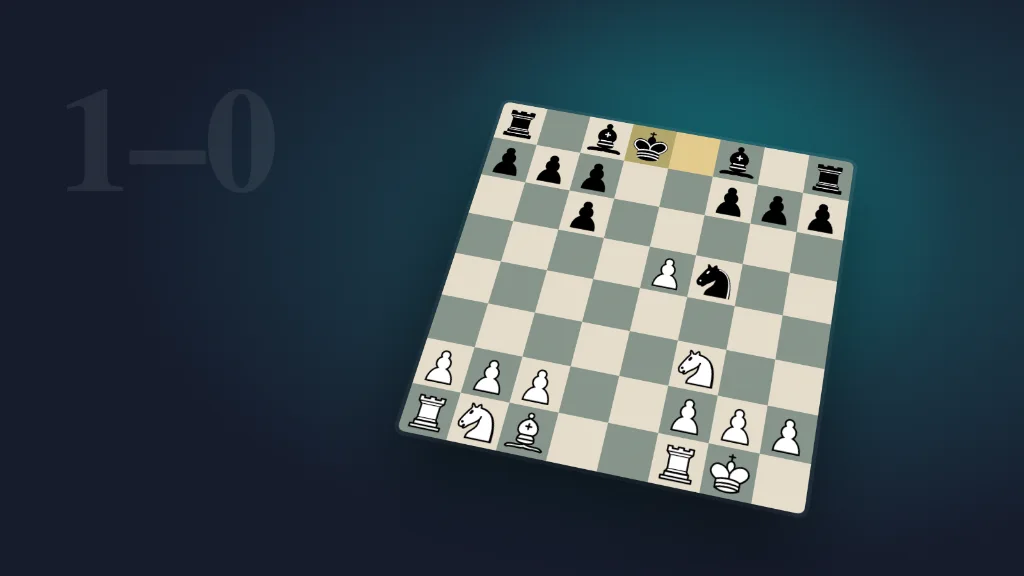
Ask a strong player about the Berlin endgame and you'll probably hear one word: drawish. Queens come off on move eight, the position is symmetrical in spirit, and Black's position has no obvious weaknesses. Of the 4,330 over-the-board master games in our database that reached it, 52% were drawn.
This game, played at Norway Chess in 2015, shows the other side: how small, patient improvements can make the endgame genuinely difficult for Black, even for the world champion.
Caruana, Fabiano 28051–0Carlsen, Magnus 2876


 7
 65

 43
 2a1
 bc
 defg
 h
- 1
- 2
- 3
- 4
- 5
- 6
- 7
- 8
- The Berlin endgame. Queens are off, Black's king has lost the right to castle, and Black has the two bishops.
- 9
- 10
- 11
- 12
- 13
- 14
- 15
- 16
- 17
- 18
- Stockfish prefers 18...Nc2, keeping the knight active.
- 19
- 20
- 21
- 22
- The turning point: White's knights now reach g7 and f5.
- 23
- 24
- 25
- 26
- Material is level, but Black's pawns are split into weaknesses and White's kingside pawns are healthy.
- 27
- 28
- 29
- 30
- 31
- 32
- 33
- 34
- 35
- 36
- 37
- 38
- 39
- 40
- 41
- The passed g-pawn.
- 41
- 42
- 43
- 44
- 45
1-0
The whole game. It starts at the Berlin endgame after 8…Kxd8: press ▶ or use the arrow keys to play through it, or click any move.
Opens in a new tab at the position on this board, with what masters played from it.
A quiet start: the endgame on the board
After 8…Kxd8, Black's king stands in the centre and cannot castle, but Black has the two bishops and a solid pawn structure. White's assets are the pawn on e5, which gains space, and a lead in development. Stockfish 19 rates the position after 9.h3 at about +0.2: White is a little better, nothing more.
The squeeze: knights to f4 and f5
White doesn't hurry. The knights head for f4 and d4, the bishop to b2, and with 18.g4 White grabs more space on the kingside. Stockfish now rates White's edge at about +0.5, and it prefers 18…Nc2 for Black, keeping the knight active.
The game went 18…Na6 instead, and after it the engine's verdict grows to about +1.0. White's knight jumps to f5 at once, eyeing g7.
765432a1bcdefghAfter 18…Na6: White's knights are ready for f5, and Black's knight is far from the kingside.
Opens in a new tab at the position on this board. The master database indexes the first 15 moves, so this deeper position opens without master statistics.
The moment it tipped: 22…Ne6?
After 22.Ba3, attacking the knight on c5 along the diagonal, White is about +1.0 better. The game continued 22…Ne6?, and the evaluation jumps to +1.9.
765432a1bcdefghAfter 22…Ne6. Now 23.Nxe6 Bxa3 24.Nexg7 brings a knight to g7, and the exchanges that follow leave Black's pawns split into weaknesses.
Opens in a new tab at the position on this board. The master database indexes the first 15 moves, so this deeper position opens without master statistics.
Material stays level all game long. What changes is the pawn structure.
After 23.Nxe6 Bxa3 24.Nexg7 Bf8 25.e6 Bxf5 26.Nxf5 fxe6, both sides have a rook, a minor piece and six pawns each. But look at the pawns: Black's are doubled on the c-file and isolated on e6 and h6, while White's kingside pawns are intact. Stockfish rates it at about +1.7.
Converting: the passed g-pawn
The rest is technique. White's king walks up to g4 and f4, the kingside pawns advance, and with 41.g6 White has a passed pawn deep in Black's camp. When the game ended after 45.Rg2, Stockfish rated White's position at about +5.9.
Why 22…Ne6 mattered so muchFor advanced readers
Before 22…Ne6 the evaluation was about +1.0; after it, about +1.9. The move lets White exchange a pair of knights in a way that sends the other knight to g7, and the forced sequence that follows ruins Black's pawn structure even though no material is lost.
The Berlin endgame has its own history: our Blast from the Past feature The Berlin Wall looks at how it entered top-level chess.
Sources and evidence11 checked claims
Every number in this article, where it came from and how it was checked. Master-database numbers are re-read from the live database and engine values re-run whenever the page is built. How we check
| Claim | Value | Source |
|---|---|---|
| Caruana–Carlsen, 3rd Norway Chess, 17 June 2015, 1–0 | 2015 | ChessCanvas master database c7ccea3a87ef, reference game 13740869 at the Berlin endgame (scripts/publishing/masterdb.mjs referenceGames); event 3rd Norway Chess 2015, 17 June 2015, Caruana 2805, Carlsen 2876, 1-0; the published score matches the record move by move (89 plies) |
| Over-the-board master games that reached the Berlin endgame | 4,330 | ChessCanvas master database c7ccea3a87ef, Modern masters · OTB (re-read at build) |
| Share of Berlin endgames drawn | 52% | computed from rows endgame-draws and endgame-games |
| Stockfish's evaluation after 9.h3 | +0.2 | Stockfish 19 Lite, 2,000,000 nodes (re-run at build, tolerance ±0.15) |
| Stockfish's evaluation after 18.g4 (its first choice for Black: 18…Nc2) | +0.5 | Stockfish 19 Lite, 2,000,000 nodes (re-run at build, tolerance ±0.15) |
| Stockfish's evaluation after 18…Na6 | +1.0 | Stockfish 19 Lite, 2,000,000 nodes (re-run at build, tolerance ±0.15) |
| Stockfish's evaluation after 22.Ba3 | +1.0 | Stockfish 19 Lite, 2,000,000 nodes (re-run at build, tolerance ±0.15) |
| Stockfish's evaluation after 22…Ne6 | +1.9 | Stockfish 19 Lite, 2,000,000 nodes (re-run at build, tolerance ±0.15) |
| Stockfish's evaluation after 26…fxe6 | +1.7 | Stockfish 19 Lite, 2,000,000 nodes (re-run at build, tolerance ±0.15) |
| Stockfish's evaluation after 45.Rg2, the last move of the game | +5.9 | Stockfish 19 Lite, 2,000,000 nodes (re-run at build, tolerance ±0.15) |
| Pawns each side has after 26…fxe6 (material level: rook, minor piece and pawns each) | six | position after 26…fxe6 replayed with chess.js; FEN 2k2br1/ppp5/2p1p2p/5N2/2P3P1/1P5P/P4P2/3R2K1 w - - 0 27: White R, N and 6 pawns; Black R, B and 6 pawns |
Keep reading
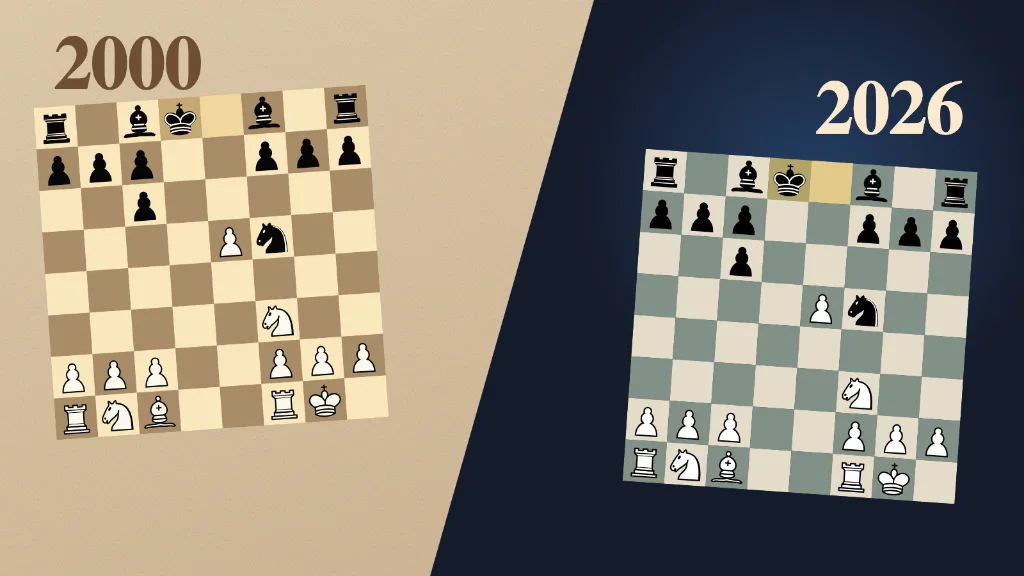
The Berlin Wall: from London 2000 to 2026
In 2000 the Berlin endgame helped decide a world championship. A quarter of a century later it is still on the board at the top level, in 4,330 master games and counting.
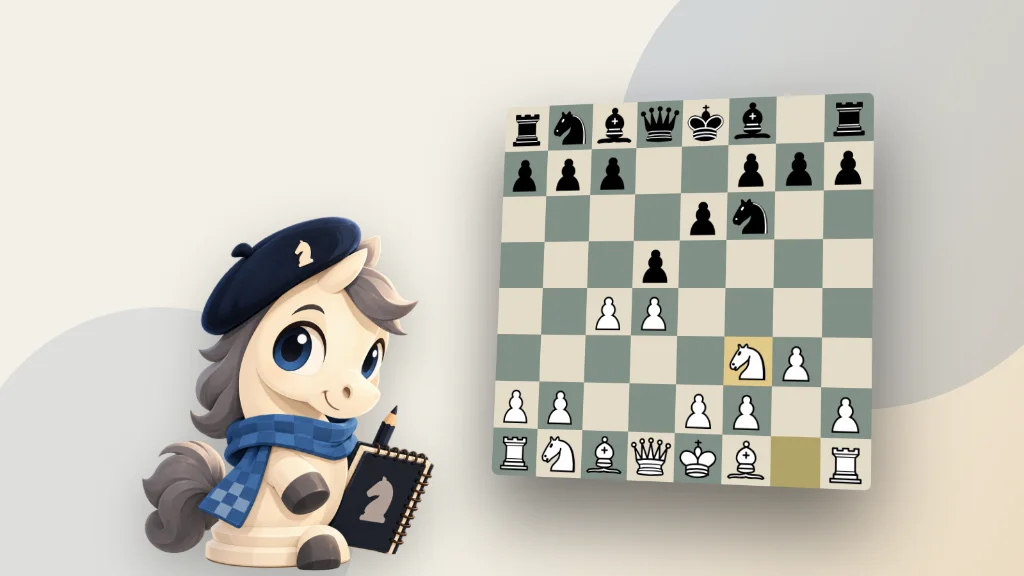
Same position, different order: how transpositions work, and why your database should count them once
Four different move orders reach the same Catalan position, and every one of them finds the same 45,726 master games. What a transposition is, and how to use it in your preparation.
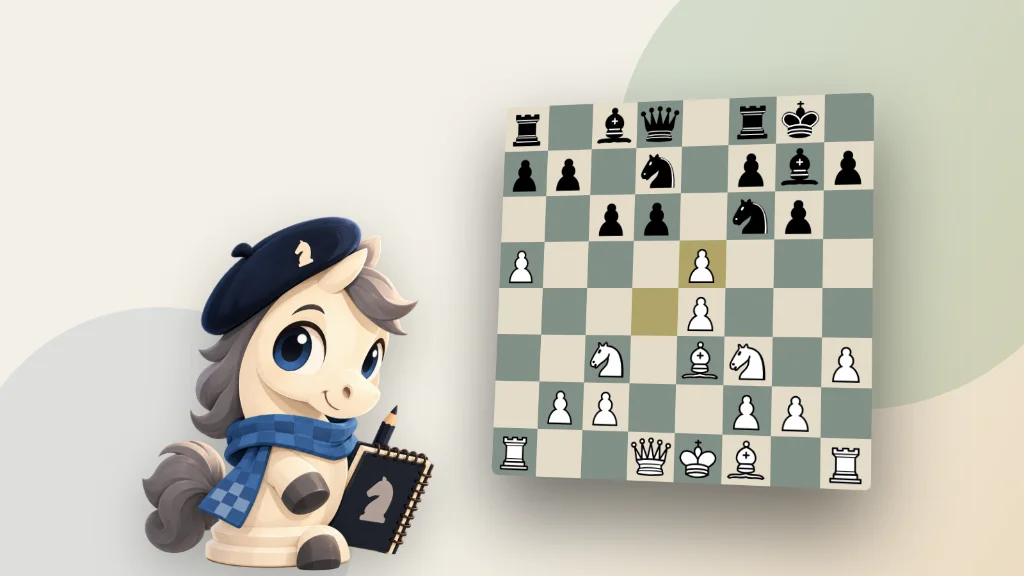
Before you recapture, look at the lines you open: a two-second check that saves games
In the Pirc, the natural recapture 9…dxe5? runs into 10.Qd6!, and White scores heavily in master games. Here is a simple habit that spots this kind of trap before you fall into it.